
1.1 What is Ronghua?
Despite the passage of time, flowers have always been an indispensable element of human life. They carry people's boundless aspirations for a better life and enrich the spiritual world. Beyond cultivating and admiring flowers, people also use them as adornments, worn in the hair to add a touch of vibrant color to their attire. In ancient China, the practice of "zanhua" (wearing flowers in the hair) transcended gender and age, becoming a shared fondness among men, women, young, and old. It permeated all aspects of life—clothing, food, housing, travel, weddings, funerals, ceremonies, and celebrations—gradually integrating into and enriching the fabric of ancient folk culture.

In ancient China, fresh flowers were called "shenghua" (live flowers), while artificial flowers made from various materials were known as "xiangshenghua" (imitation flowers). Given the delicacy and seasonal limitations of fresh flowers, those worn at the temples often could not last long. Imitation flowers, with their bright colors and enduring nature, became the preferred alternative. Not only did they break free from the constraints of time, but they could also bring together the blossoms of all four seasons, displaying a unique charm. As demand grew, the "xiangshenghua" industry emerged and gradually flourished.

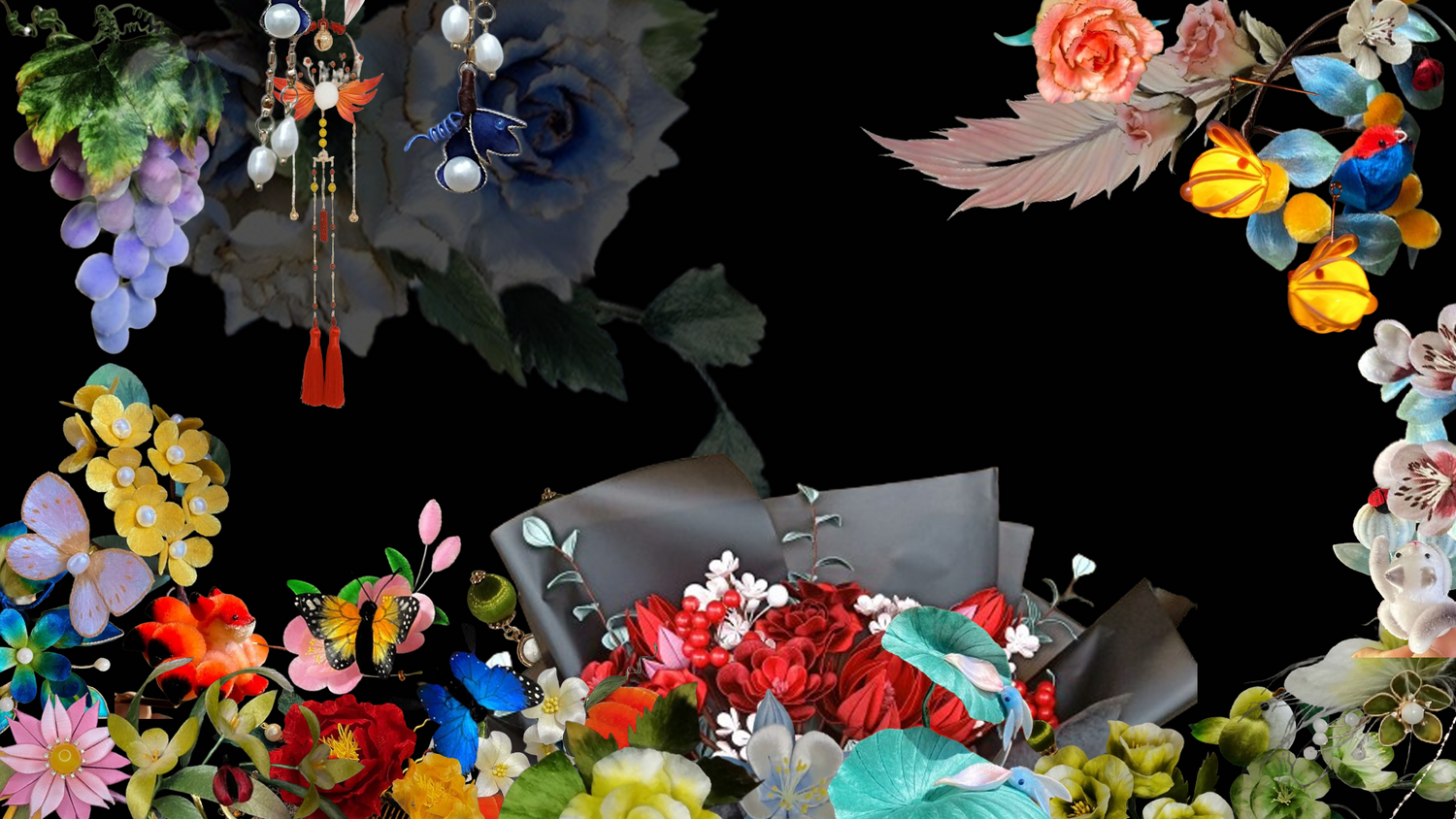
A Ronghua Peony
The materials for imitation flowers were rich and varied, ranging from lightweight paper and silk to precious materials like silk thread, gemstones, pearls, gold, and silver. These creations could be delicate and colorful, opulent and dazzling, or crystal clear and radiant. Each piece was a crystallization of masterful craftsmanship, reflecting the ancient Chinese people's ultimate pursuit of beauty and their profound yearning for a better life.

Ronghua is a unique form of "xiangshenghua" art, also known as "Gonghua" (palace flowers, originating from the exquisite craftsmanship of the imperial court) and "Xihua" (auspicious flowers, festive creations from folk workshops). It is a magnificent ornament skillfully crafted by blending mulberry silk with metal elements such as brass or silver wire. Not only is its appearance full and resplendent, exuding an air of elegance and luxury, but due to its homophonic association with "ronghua" (prosperity and splendor), it carries auspicious connotations. Treasured by both nobility and commoners alike, it became a fine object for conveying wishes of good fortune.