
2.1 Essential Materials for Making Ronghua
Silk Thread
Silk can be categorized into raw silk and degummed silk based on processing. Raw silk refers to silk thread that has not undergone degumming, while degummed silk is produced by degumming raw silk. Degummed silk is softer and has a better luster, making it commonly used for velvet strip production. Due to its stronger support, raw silk is often used for velvet balls and animal-style Ronghua. Both raw and degummed silk are types of silk thread, differing only in processing methods and applications. Below is an explanation and analysis of raw silk, degummed silk, Suzhou embroidery thread, Hunan embroidery thread, and other threads available on the market to help identify the types of silk threads at hand.

Raw Silk: Silk thread in its non-degummed state, with a stiff texture and distinct strands. Suitable for velvet balls, animal shapes, etc.
Degummed Silk: Silk thread after degumming, with a soft texture and fine luster. It is the primary material for making Ronghua. In its original state, degummed silk often comes in a large, net-like skein, requiring splitting into finer strands before use. Not recommended for beginners.

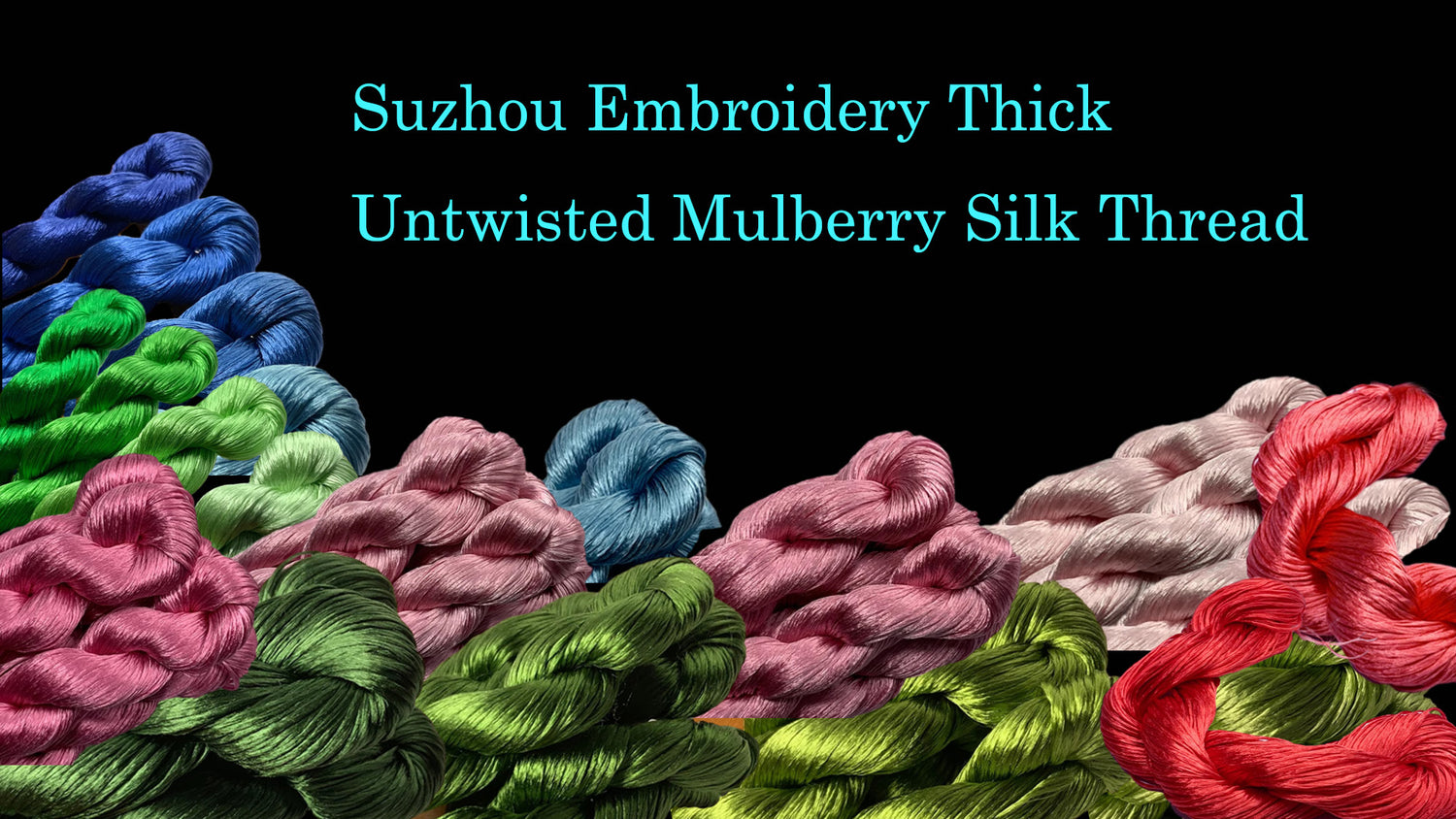
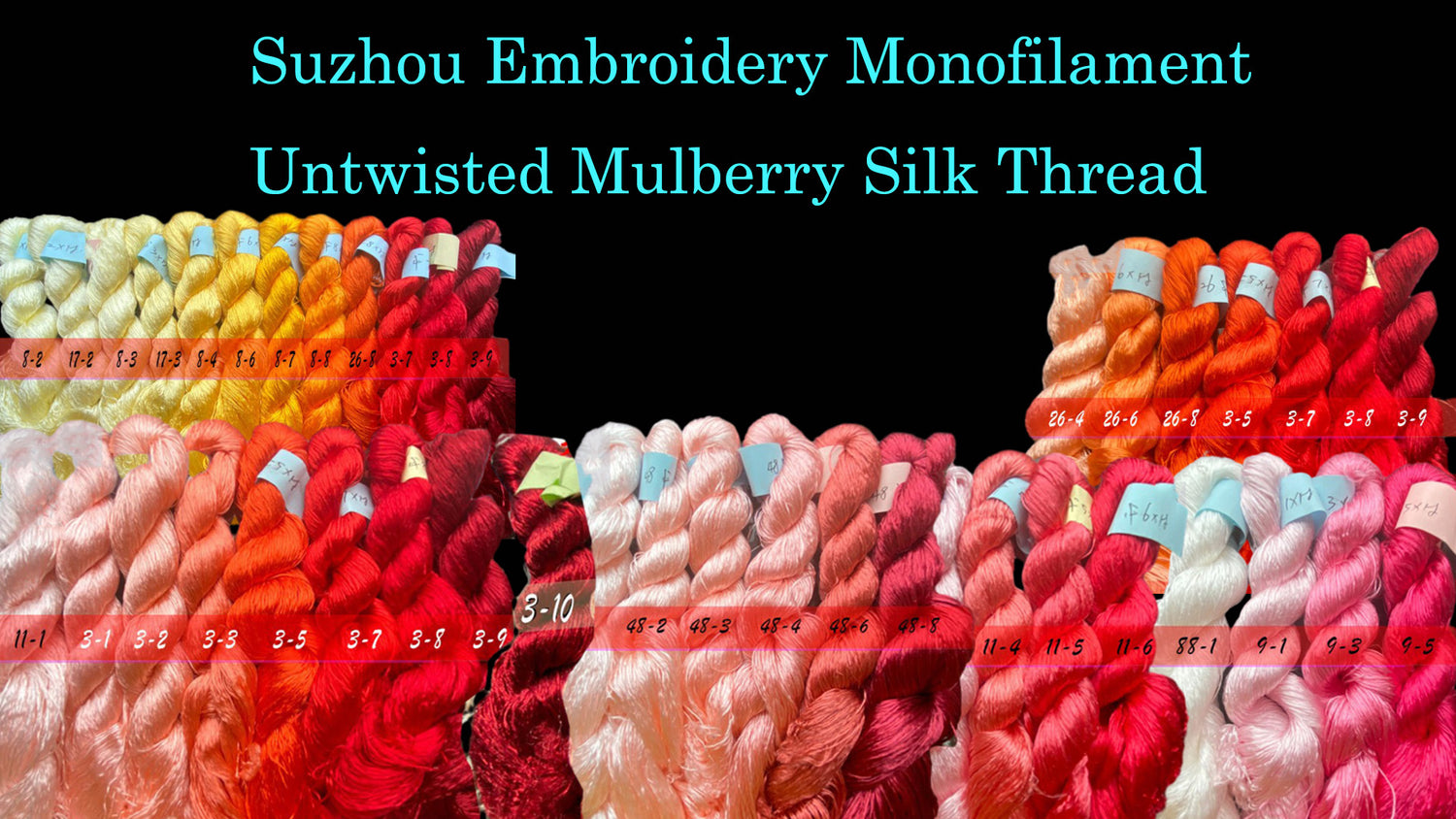
Suzhou Embroidery Thread (e.g., Untwisted/Split-Free Suzhou Embroidery Thread): A type of degummed silk that has been processed for convenient measuring. Typically, one strand consists of 16 filaments, making it very fine. Due to its ease of measurement and combing, it is widely used by Ronghua enthusiasts. (Suzhou embroidery thread that requires splitting can also be used and may offer better velvet texture and fineness. However, its common specifications are finer, and it usually comes as two small strands twisted into one, requiring splitting, which is more labor-intensive. It can be tried if time permits.)
Hunan Embroidery Thread: A type of degummed silk processed for convenient measuring. Typically, one strand consists of 50-112 filaments (the filament count per strand is not fixed, so thickness may vary). Two small strands are twisted together to form one larger strand, making it slightly thicker than split-free Suzhou embroidery thread and relatively more convenient for measuring. (It is worth noting: Both split-free Suzhou embroidery thread and Hunan embroidery thread are types of silk thread, with no fundamental difference. However, Hunan embroidery thread is produced by only one factory in China, so its output and quality may be slightly inferior to Suzhou embroidery thread, with occasional batch quality issues. This does not mean that Ronghua made with Hunan embroidery thread is not genuine silk Ronghua.)

On our website, you can find a wide variety of silk threads. We select the highest quality silk threads from China with the most extensive color range. To facilitate beginners, we have split the silk threads into smaller units, with the smallest specification available being 80 meters. We have also created numerous color combination sets of different styles, which requires significant resources. We hope this proves helpful to you.

Brass Wire
The brass wire mentioned here is used for making velvet strips and serves as the framework supporting the velvet silk.
Brass Wire: Commonly used types are 0.2mm and 0.18mm brass wire with a purity of H65. In some cases, 0.15mm, 0.25mm, 0.3mm, and 0.6mm specifications may be used. (The author does not recommend using copper wire here. Firstly, copper wire oxidizes too quickly, easily turning black and affecting the quality of the work. Secondly, after annealing, copper wire becomes softer than brass wire. Although it is easier to twist, velvet strips made with it are more prone to deformation compared to those made with brass wire. Thirdly, copper wire turns black after annealing, requiring secondary treatment, making it more troublesome to work with than brass wire.)
Color-Fast Copper Wire: Refers to copper wire with a protective coating to prevent oxidation. It has good anti-oxidation properties and is commonly used for wire inlay Ronghua, branch reinforcement, and special floral designs. 0.3mm and 0.5mm are commonly used specifications.
Stainless Steel Wire/Iron Wire: Commonly used specifications are 0.3mm and 0.5mm soft wire, used to enhance the support of the entire floral structure's branches. (Stainless steel wire and iron wire can be used interchangeably.)

Flower Stamen
Commonly used types are fondant stamens and copper stamens. Fondant stamens are finer and more miniaturized, making them ideal for creating delicate flowers. Beginners should avoid purchasing large plaster stamens. Copper stamens are used for certain designs like wire inlay Ronghua.

Main Body
Metal supports used to fix the finished floral design, typically including hairpin rods, hairpins, hair combs, and hair clips.
Glue
Commonly used types include UV glue, white latex glue, and GS jewelry slow-dry glue. UV glue is used for making stamens or fixing special parts. White latex glue is used for treating stamens, adhering glitter, and gold leaf. GS jewelry slow-dry glue is used for bonding velvet strips and wire inlay Ronghua.
Setting Liquid For seeting the shpe of Ronghua petals, the best choise is Setting Liquid.
You can also choose to use unscented or lightly scented hairspray. (Note: Since hairspray contains fragrances and formaldehyde, remember to wear a mask and ensure ventilation when using it for shaping. Do not perform the shaping process in enclosed spaces. Additionally, different types of hairspray should not be mixed to prevent accidents.) Nowadays, Setting Liquid is more commonly used for setting Ronghua, which you can find on my website.
Anti-Slip Powder (Magnesium Powder)
Anti-slip powder helps in better twisting brass wire. Athletes' commonly used gym magnesium powder can be chosen. (For convenience, it can be portioned into small containers. Wash hands after use. Frequent use of magnesium powder can roughen fingertips, so remember to maintain hand care regularly.)

Binding Thread
Binding thread is mainly used for fixing petals and assembling floral designs. It is recommended to use single-strand velvet thread (note: velvet thread is not made of silk, velvet threads are specifically designed for the production of Chanhua and can also be used in the assembly of Ronghua, do not confuse it with silk thread). Common colors include brown, tea green, yellow, etc.
Colored Clay Accessories
Such as small berries, small lotus pods, etc.
Velvet Strip Insertion Board
Used for placing velvet strips. This can be substituted with foam board.
Floral Wire (No. 26)
Used to support leaves and prevent deformation.
Colored Pearls/Imitation Pearls
Used to enhance the delicacy of the work.

Wire Inlay Template
Used when making wire inlay Ronghua to improve the neatness of the work.