
3.3.2 Arranging Threads and Wrapping Brass Wire
Share
Arranging Threads
Arranging threads refers to neatly aligning the combed velvet array and securing it in place.

01 After the entire velvet array is combed, divide it into two equal parts, ensuring the silk strands remain parallel. Secure each part with a food storage clip. Then, slide the two parts together laterally to merge them (this prevents the strands in the middle of the array from overlapping, which can affect the velvet separation effect in the final strip).

02 After merging, use another storage clip to secure the entire combined array, replacing the previous two clips to unify it into one. If the clip feels insecure, you can wrap a rubber band around each end of the clip or replace it with a wooden clip with sponge padding. If the silk strands on either side of the array appear loose, try to handle and straighten them by hand while pulling them taut. Once secured, confirm the width of the velvet array is between 4-4.2 cm.
03 Push the rubber bands on both ends of the wooden rod inward to clamp the ends of the velvet array, helping the width maintain its shape. Attach another metal clip below the wooden clip.

04 Once clipped, let it hang over the edge of the table. Use the weight of the hanging clip itself to pull the velvet array taut. Avoid directly securing the bottom of the velvet array to the table surface with a large clip, as this over-tightens the entire array, leaving no room for the brass wire to be wrapped and secured, which can cause the velvet to shed later when cutting the strips.
05 If the weight of the metal clip is insufficient, consider adding a magnet or hanging a small metal weight to it for extra pull.
Tips
After securing, you can gently wipe the sides of the velvet array and any frizzy areas on its surface with a damp cloth to smooth down any staticky strands, preventing tangling when wrapping the brass wire.
Bind Brass Wire
Binding brass wire refers to evenly and neatly winding the brass wire onto the velvet array. This step directly affects the success of subsequent steps. Many beginners who struggle to make Ronghua fail at this stage. For a more detailed explanation, refer to the dedicated section on this website.

(Image caption: Leave a few millimeters of space from the edge of the velvet array here.)
(Image caption: Clamping directly onto the edge can easily cause the velvet array to narrow.)
01 Take the prepared brass wire. The pre-twisted end should be on the left. Use the two separated strands of wire to clamp the velvet array, one in front and one behind. Note: the pre-twisted end should not be tightly pressed against the left edge of the array; leave a few millimeters of space.
02 If clamped too tightly, it can cause uneven force application and deform the velvet array.

(Image caption: 1. Pull outward straight simultaneously, creating a mutual stretching force; 2. Simultaneously lift both ends, twisting left downward and right upward.)
03 Coordinate both hands simultaneously. Pull the brass wire taut. While pulling, twist the wire by moving the left hand downward and the right hand upward. The application of force here is crucial. Both hands pulling outward provides a stretching force, while twisting (left down, right up) provides the twisting force. Both actions must be performed together to ensure the velvet array does not narrow. If you focus only on twisting and forget to pull outward, the entire array will narrow.

04 If beginners find it difficult to twist the wire on the right side by hand, they can coordinate both hands to first create an upward spiral structure, then proceed with twisting.
05 When wrapping the brass wire, try to maintain consistent spacing between each wrap, keeping it around 1 cm. Avoid bending or kinking the brass wire.
06 The finished wrapped velvet array should look like the image provided.
Cutting Velvet Strips
Cutting velvet strips refers to using large scissors to cut each wrapped brass wire section one by one.

01 Remove the large clip from the bottom and take down the entire velvet array.
02 Trim the velvet strands at the very top and bottom. Fold the velvet array outward and place it on your palm to begin cutting the strips. (The Northern school 'supported cutting' method is used here. If uncomfortable with this, you can switch to the Southern school 'hanging cutting' method.)

03 Cut the velvet strips evenly on a leather pad, craft cutting mat, or smooth wooden board (use the middle-to-front section of the scissor blades for cutting; avoid using the very tips or the base near the pivot). Try to cut each strip in one smooth motion without pausing. Arrange the cut strips neatly and evenly.
Aligning Velvet

Aligning velvet refers to aligning the velvet strands of the cut strips as much as possible, facilitating the next step. Coordinate both hands to pull the strip taut. Press the strip against the edge of the table or the side of a wooden board, using the brass wire as the axis of symmetry to align the velvet strands. Once aligned, keep the left hand pulling taut without moving, while the right hand gently twists the strip outward.
Twisting Velvet

Twisting velvet refers to densifying the twisted strip, making it fuller and more compact.
Hold the brass wire of the strip with the left hand. Use the twisting board (small wooden block) with the right hand. Place the brass wire on the right side of the strip onto the large wooden block and twist it forward with steady force. Stop once the brass wire is tightly twisted. (The ideal tightness for the brass wire is just before the point of breaking—the critical value where it's almost but not quite snapped. This requires practice to find the optimal twisting force for you.)
Basic Velvet Strip Completion

After completing the above steps, you will obtain basic velvet strips as shown in the image.
Tips
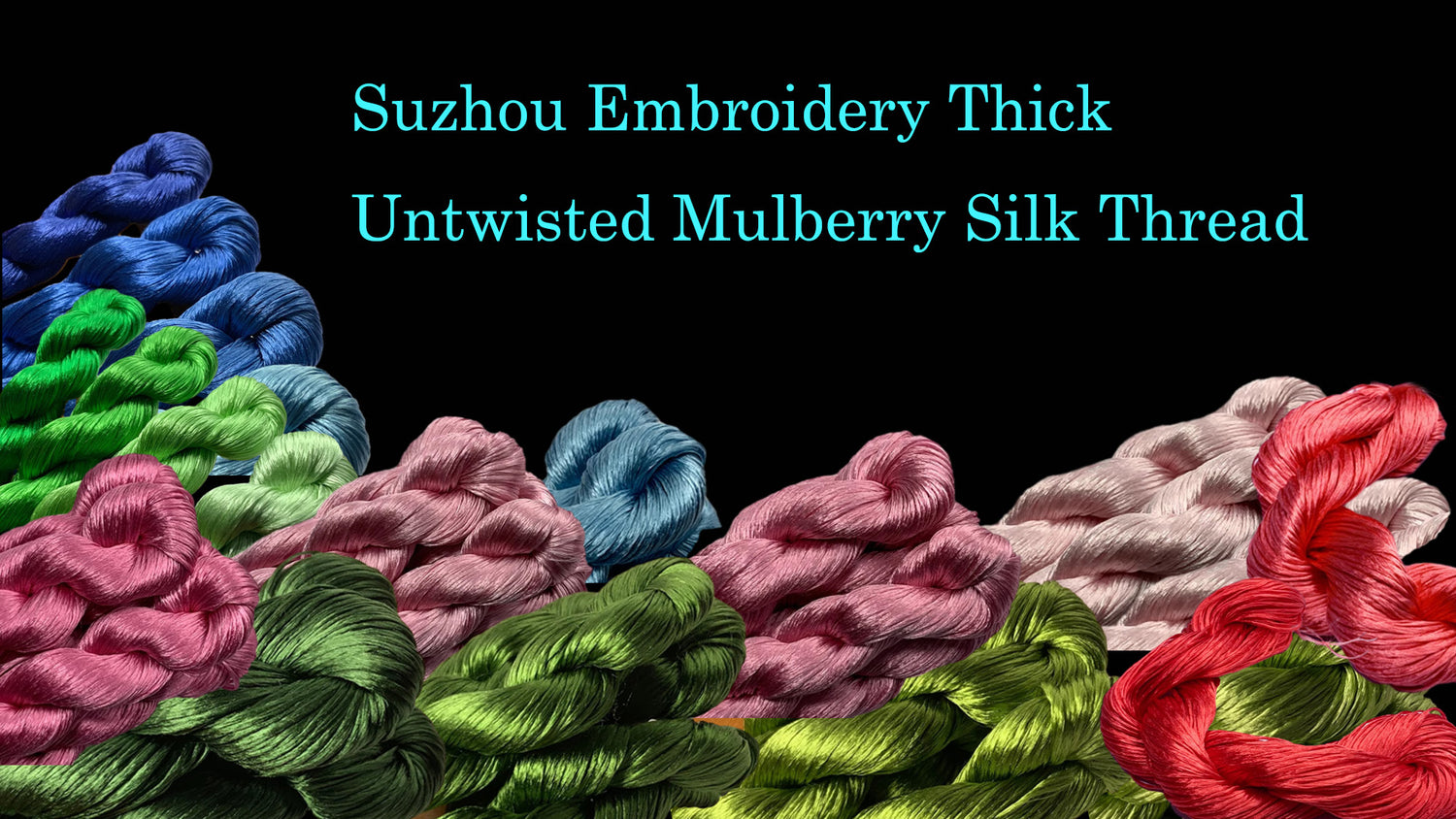
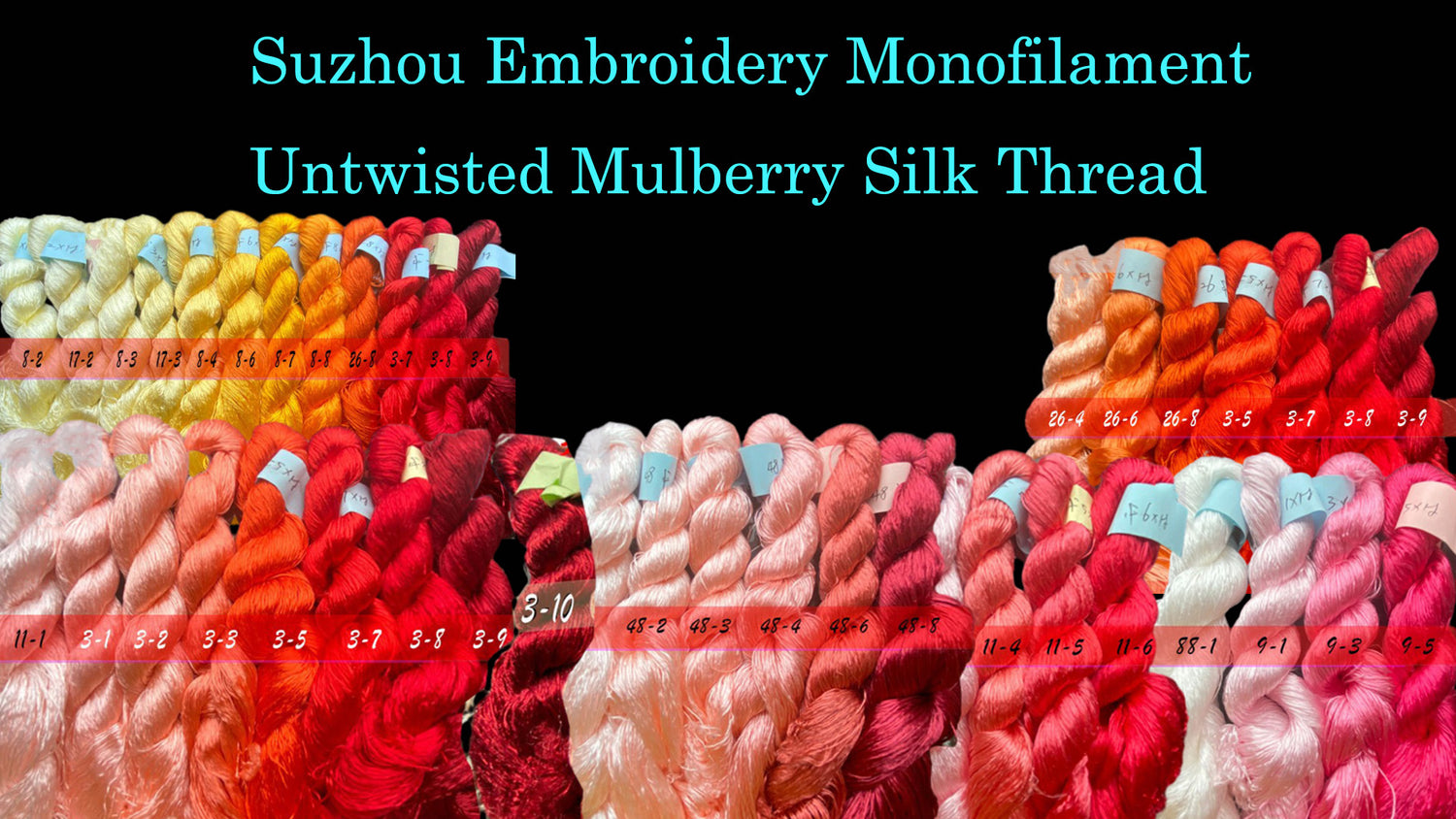
- ① Before combing, confirm the type of silk thread you are using. Some threads, such as Suzhou embroidery thread or Hunan embroidery thread, need to be split before they can be combed.
- ② When combing, avoid blindly using non-specialized tools like toothbrushes or shoe brushes.
- ③ Large and small scissors each have their specific purposes and should not be used interchangeably.
- ④ Do not leave the brass wire ends too long, as this can affect cutting the strips and aligning the velvet.