
4.1.2 Large Leaf - Bonding Technique for Seven to Nine Thick Velvet Strips
Share
Using Camellia Leaf as an example, applicable to leaves of various flower types
Key Summary:
- Try to shape the velvet strips to be as smooth and even as possible.
- Apply glue evenly at the bonding point; avoid using too much.
- After bonding, ensure no gaps appear between the velvet strips; join them tightly.
- When binding the velvet strips, remember to align and bring the bottoms of the strips together.
Production Steps

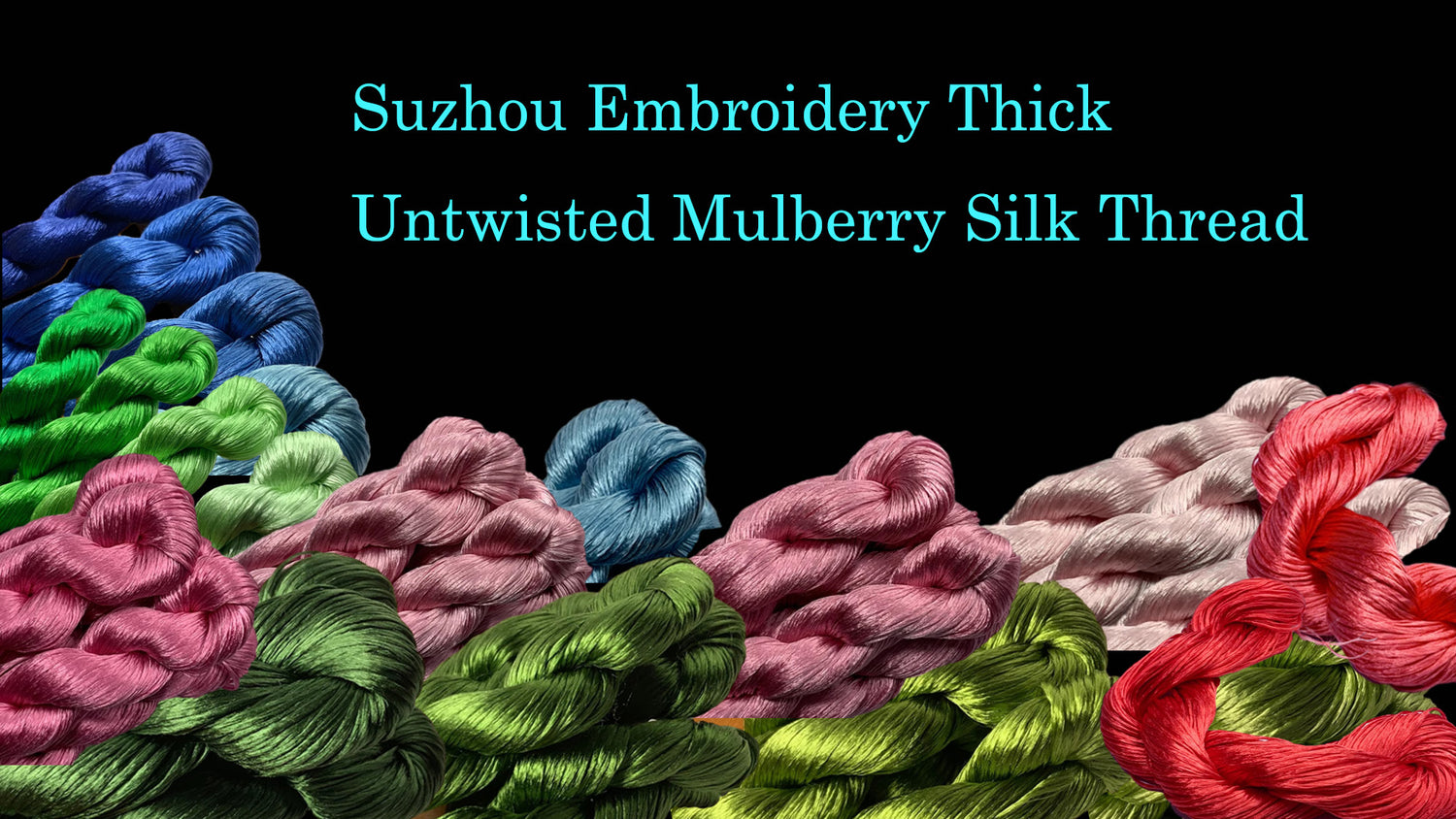
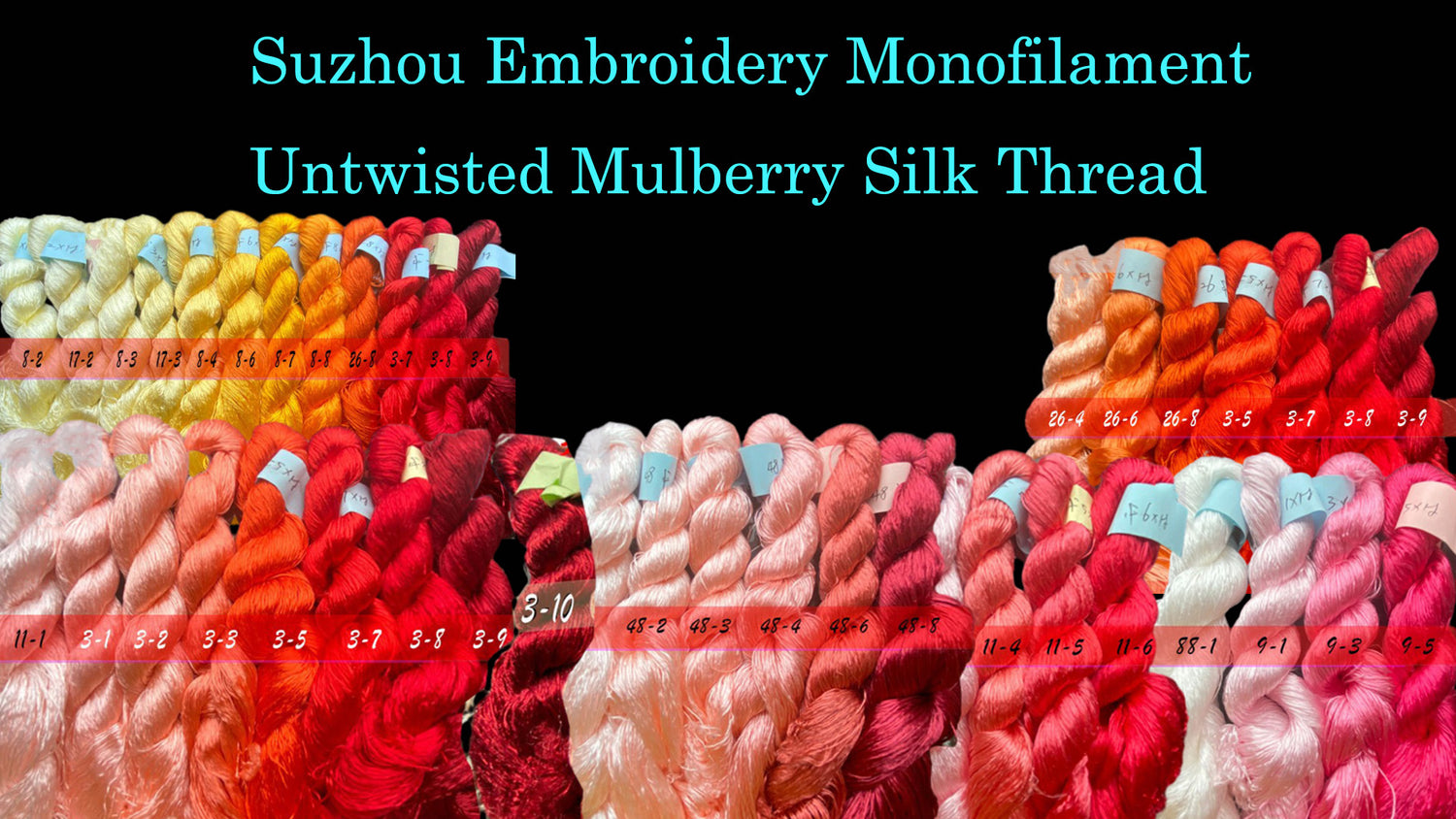
01. Prepare 7 sets of Suzhou Embroidery Untwisted Mulberry Silk Thread (no splitting required). The thread row width is 3.5cm, with copper wire spacing of 3-4mm. Use 0.2mm copper wire to make the velvet strips.
02. Shape the velvet strips into the form shown in the diagram.

(Diagram Text: These two velvet strips are symmetrically distributed and positioned about 1mm lower than the central one; The bottoms of the velvet strips should touch each other.)
03. Place one velvet strip in the center as the axis of symmetry. Using it as the central line, symmetrically place strips to its left and right. The position of each pair of strips should be slightly lower than the previous pair. Pay attention to aligning the bottoms of each strip when placing them (this is very important). Continue until 7 strips are placed.

04. To help beginners better imitate and learn, the spacing between the strips is annotated with text in the diagram for reference.
05. Using the central velvet strip as the axis of symmetry, gently scrape and curve the strips on both sides in sequence to fit the arc, then bond them.

06. The bonding of the 7-strip leaf is complete.
07. You can use tweezers to gently scrape the bonded leaf to make the leaf tip curl outward, making the overall leaf more vivid.

08. Prepare 13 sets of thread. The thread row width is 4.5cm, with copper wire spacing of 3-4mm. Use 0.2mm copper wire to make the velvet strips.
09. Shape the velvet strips into the form shown in the diagram.

10. Again, place one velvet strip in the very center as the axis of symmetry. Using it as the central line, symmetrically place strips to its left and right in sequence. The position of each pair of strips should be slightly lower than the previous pair.

(Diagram Text: The normal state after binding the thread; For the convenience of labeling spacing, the state after being spread apart (readers do not need to spread them like this))
11. When binding the thread according to the spacing, the normal state is as shown in the left image above. The right image shows the strips spread apart only for the convenience of labeling the spacing. This labeling method applies to subsequent large leaf combinations (such as peony leaves, lotus leaves). When operating on your own, you only need to measure the spacing correctly and bind them properly, without needing to spread them apart as shown in the right image.

12. Shape and bond them in sequence, ensuring there are no gaps in the middle.
13. The bonding of the 9-strip leaf is complete.