
1.2 Tracing the Origins – The Rise of Ronghua
While its origin is often traced back to the Tang dynasty without definitive documentary evidence, the emergence of Ronghua is undoubtedly closely tied to the flourishing silk industry. The ancient Chinese ingeniously utilized the properties of silk to create this lifelike floral art.
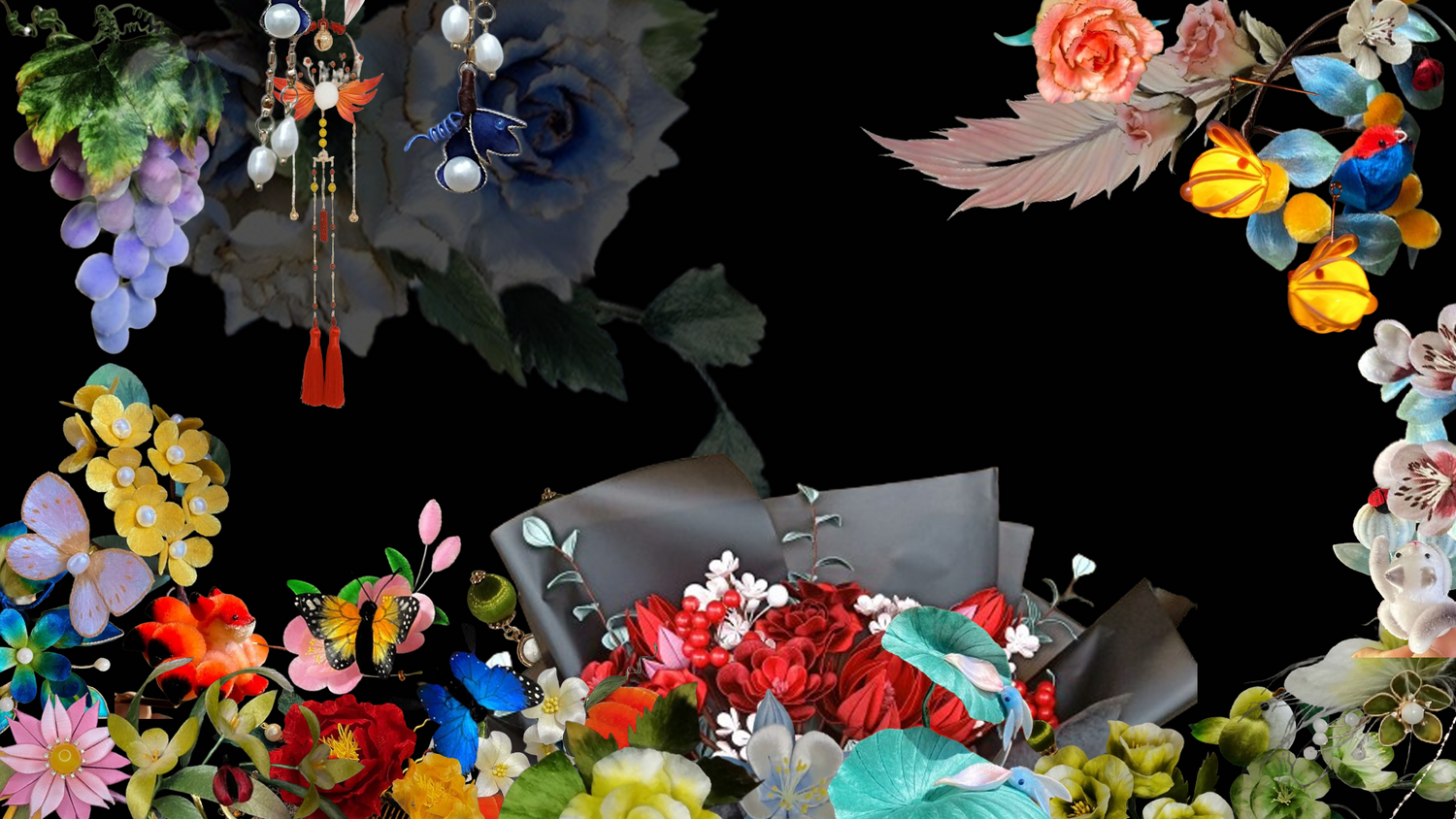
With the widespread dissemination of silk textile techniques, Ronghua, this uniquely crafted imitation flower, gradually integrated into everyday life, becoming an indispensable part of people's routines. As an enduring alternative to fresh flowers, Ronghua, with its distinctive silk luster and realistic form, transcends the limitations of seasons and time, allowing blossoms to remain perpetually vibrant in one's hair, radiating colorful brilliance and adding an extraordinary touch to ordinary life.

Historical records from the Ming dynasty show that Ronghua flourished not only within the imperial court but also widely among the populace. At that time, Nanjing, as a relatively developed economic center, provided a solid foundation for the rise of Ronghua through its thriving silk industry. Particularly noteworthy is that the prosperity of Nanjing's silk manufacturing yielded abundant silk scraps.
These otherwise discarded materials were ingeniously repurposed by folk artisans. After careful sorting and skillful processing, these scraps were transformed into lightweight and soft Ronghua, further promoting the popularization and development of this art form.

The *Veritable Records of Emperor Shenzong of Ming* contains a reference to Ronghua: "On the day Dingchou, as stone pillars were erected in the main hall of the longevity palace, the emperor bestowed upon each of the three senior ministers two silver-handled Ronghua branches and two bolts of large red cloud-patterned ramie silk..." This indicates that Ronghua, as a type of "palace flower," was used as an imperial gift for ministers.
The term "silver-handled Ronghua" also highlights the distinction between officially crafted Ronghua and folk versions. Officially produced Ronghua often used silver handles for insertion and securing, while folk versions typically employed copper rods or polished wooden hairpin sticks.

The Ming dynasty novel *Second Collection of Amazing Tales* also depicts scenes of common women wearing Ronghua in their hair. With its delicate, exquisite appearance and affordable price, Ronghua won the favor of women from all social classes and became widely popular for a time. In the classic Ming opera *The Tale of Ronghua*, a generational heirloom Ronghua even serves as a key plot device, delicately portraying the touching story of an engaged couple overcoming malicious obstacles to ultimately unite for life. This sufficiently demonstrates that Ronghua had already become deeply integrated into people's daily lives, an indispensable part of their existence.

(Illustration) Comic book adaptation of *The Tale of Ronghua*